
10 Ways To Make Your Home Energy-efficient
10 Ways to Make Your Home More Energy Efficient
Not too long ago in our country's history, talking about making your house "greener" might get you labeled a hippie tree-hugger. But times change, and as gas, electricity, and water prices creep up, more and more homeowners are seeing the (strong) advantages that come with considering the environment when you make decisions about your household.
Are you interested in making your home more energy-efficient -- and saving money in the bargain? You have a lot of options, from cheap to expensive, so read on to discover whether there are some big (or small) energy-saving opportunities that you're missing.
1. Get an energy audit
Most utility companies offer an energy audit, oftentimes for free:
They'll send an expert out to your house to take a look at all your appliances, your lights, your windows, your doors, and more -- then make recommendations for changes you can make that will save energy (and money) every month.
If you want a personalized rundown of everything you could do to and for your house to make it more energy-efficient and environmentally friendly, an energy audit is a must.
2. Swap out your lightbulbs
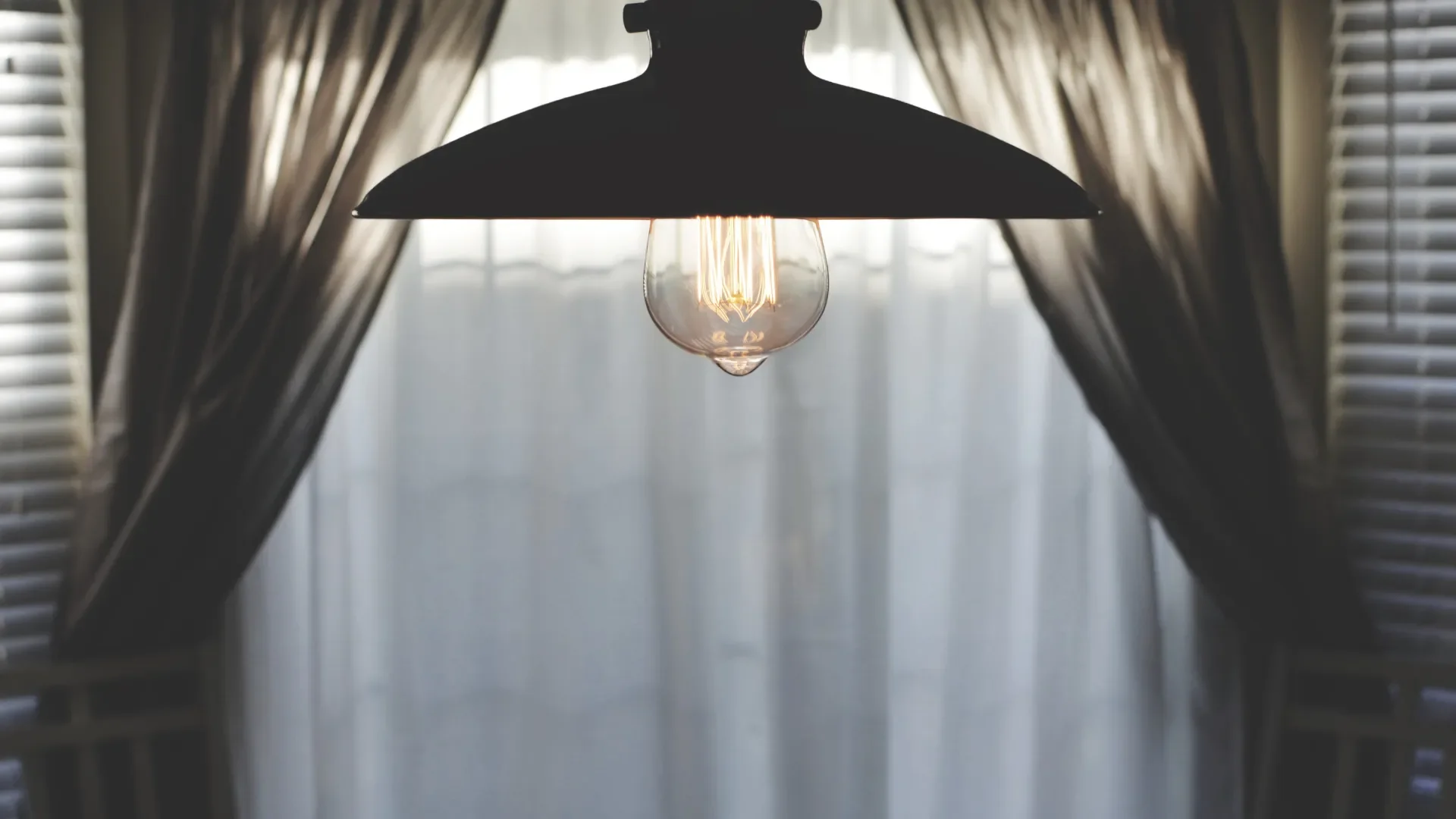
Compact fluorescent or even LED bulbs are more expensive than incandescent bulbs, but they also last at least 10 times longer than incandescents and use only about 25% of the energy of an incandescent bulb.
As your incandescent light bulbs flicker out, consider replacing them with a greener alternative.And if you decide to swap them all out at once, you'll start seeing a difference pretty quickly in your utility bills!
3. Pay attention to the sun
There's a lot you can do to heat and cool your home without spending any money at all -- but you'll need to keep tabs on where the sun is in the sky.
In the northern hemisphere, windows with southern exposure are going to get the most direct sunlight, so start with those.
Make note of whether and when the sun shines into your home across every season, then adjust your habits (and your blinds) accordingly.
For example, if the sun is shining directly into your house during the winter season, then you might be able to save some money on your heating bill by opening up all your curtains and blinds in the morning to allow the sun in. But if you're getting that direct sunlight in the dead heat of summer, then the opposite applies: Close your blinds and curtains in the morning to keep your house cool.
4. Weather-stripping your windows
Especially in some older houses, sometimes windows might not be entirely airtight -- meaning that you've got drafts from the outside sneaking hot or cold air into your home against your wishes.
A relatively cheap and easy fix is weatherstripping your windows to eliminate those drafts and ensure that what's outside doesn't creep inside and vice versa. It's as simple as a trip to a hardware store and a few minutes to weatherstrip each window back at the house.
5. Turn down your water heater
Hot water feels amazing in the shower ... but here's the thing: Your water heater is constantly working to keep its water consistently hot, and if you've got the gauge set at a high temperature, then "consistently hot" takes a lot of energy to maintain.
Take a look at your water heater's settings and ask yourself if the hot water really needs to be as hot as you have it.
Turning down the temperature ten or even five degrees can result in some surprising savings -- and you might not even notice when you're mixing that hot water with cold for your ablutions!
6. Collect rainwater
Depending on where you live, the weather might be an asset that you haven't tapped yet. You can't use rainwater for everything, or even very many things -- you can't drink it, and you won't want to use it to cook, wash dishes, or bathe with -- but if you keep a cistern of rainwater in your yard, then you'll always have a green way to water your grass and flowers in the spring and summer.
7. Swap out your showerheads
If you like to take long showers, this fix can be especially helpful: Change your current shower head for a low-flow version that uses less water. These often have several settings for pressure and spray so that you can customize your shower experience -- and you probably won't even notice that you're using significantly less water once you make the change.
8. Buy a smarter thermostat
You don't necessarily need a "smart" thermostat for your home (although it's always nice to change the temperature using a phone app from the couch -- just saying!), but if you don't have a thermostat that you can adjust to change the temperature at different times of the day, then you should definitely invest in one.
For example, you could set your thermostat to lower the temperature of the house by 10 to 15 degrees when you're at work during the day, and instruct it to start bringing the temperature back up to "normal" an hour to 30 minutes before you arrive home. Many thermostats even let you designate temperature by days of the week, so if you know that you're almost never home on Saturday night or Sunday morning, you can adjust your temperature accordingly.
9. Air-seal (and maybe insulate) your attic and basement
You may know that heat rises, and that applies as much inside your house as it does in the world outside.
That means a drafty attic could result in a lot of energy spent keeping the house warm in the wintertime, and it won't do you any favors in the summer, either. An uninsulated basement can also let in cold air in the wintertime and out in the summertime. Check to see if your basement and attic are air-sealed and insulated. If not, consider investing in an upgrade.
10. Use a manual push mower
If you live in a region where grass grows like weeds and you don't need to water, then maybe it makes perfect sense to keep your lawn ... but you'll still need to mow it regularly. One greener alternative to a riding mower or a motorized push version is an old-fashioned manual push mower. They do work, but you'll be using your own elbow grease instead of gasoline to power the blades, so you'll get a workout while you mow.
Deciding to make your home more energy-efficient can involve a simple move like turning off water to rarely used sinks and toilets, or as complicated and involved as replacing appliances and installing solar panels. Figure out your ideal level of investment and take things one step at a time -- before you know it, you'll have a green home that saves money without sacrificing comfort.

5 Common Mistakes First Time Home Buyers Make
5 Common Mistakes First Time Homebuyers Make
Buying a home is always an anxiety-ridden process, and that goes triple for anyone who’s embarking on homeownership for the very first time. There’s so much to do and so much you don’t know that “overwhelming” hardly seems like an appropriate description of how it feels.
Even though you don’t want to scare yourself away from the entire process, you still need to be wary of falling into a few common traps that first-time buyers generally don’t avoid. If you’re aware of these five potential mistakes -- and able to keep yourself from making them -- then you’ll be saving yourself some significant stress on your homebuying journey.
1. Not understanding your down payment options
The biggest headache for so many first-time buyers is the down payment. If you’ve ever bought a car, then you’re probably familiar with the concept -- it’s money that you contribute to the total cost of the purchase.
A down payment of just a couple thousand dollars can get you a head start on your car. If you don’t have a certain amount to put down on your home loan, however, you might find yourself paying private mortgage insurance (PMI) on the lifetime of the loan.
Depending on your credit score, the bank and other factors, PMI could cost between 0.5 percent to 1 percent of the total loan amount.
Most banks require at least a 20 percent down payment before they will waive the need for PMI on the loan. And most homes in this area cost about $300,000, so that means a buyer would need to bring $60,000 to the table in order to avoid PMI.
Some government organizations and lenders try to incentivize first-time homeownership by offering free down payment grants or loans to qualified buyers. Depending on your age, income level, credit score and other factors, you could qualify for free money to wrap into your down payment; a full rundown of programs is available at downpaymentresource.com.
2. Not getting prequalified for a loan
Between the amount of money you plan to put down on the home, the potential PMI and other cost factors, your monthly cost could be significantly more (or possibly less) than some of those calculators will show you online.
So before you trust those “estimated monthly mortgage loan amount” numbers that you see popping up next to your potential new dream home on Zillow or a brokerage website, it pays to figure out what you can actually afford -- and that means getting prequalified for a home loan.
This means you will need to talk to a mortgage loan officer and submit a slew of documentation, from your monthly pay stub to your credit score, in order for that loan officer to tell you how much money you can get for your home loan. It’s a little bit painful, but the prequalification letter you’ll get as a result is much more credible than a quick qualification you can pull up on an app -- and that means sellers will take it more seriously when it comes time to put in an offer.
3. Not finding a qualified real estate agent
It’s so easy to find homes online these days that you may wonder why a real estate agent is even necessary. After all, isn’t the hard part -- finding the place you want to buy -- something you can do yourself?
Well, maybe. But in areas with red-hot markets, you’re probably not seeing the most updated listings -- that home you just fell in love with online might be under contract before you can set up a time to tour it.
Not only can an agent make sure you have access to listings the second they hit the MLS, but a qualified agent should also provide expertise on the area where you want to move. Whether that’s feedback on who can help you with homeowners’ insurance quotes to warnings about some of the frequent pitfalls of owning a home in that neighborhood in particular, a qualified agent is an invaluable resource.
4. Not spending the night in the neighborhood
If it’s at all possible, see if you can find an Airbnb or another vacation-rental type of setup where you can crash for a night or two -- preferably closer to a week -- so you can try your new neighborhood on for size.
Is an 8 a.m. arrival time at work still reasonable with this neighborhood’s commute?
Where are the closest grocery stores, parks, rec centers and hiking trails?
What are the overnight noise levels? If there’s a train that rolls through town in the early hours of the morning, you’re near a highway or a flight path -- and any of that is going to disturb you -- then it’s best to figure it out before you’re spending your first night in your new home and wake up to unpleasant (and unexpected) noises.
At the very least, you can learn enough about the neighborhood to know how close to (or far away from) the bus line you need or want to be and target your home search accordingly.
5. Not understanding what’s fixable and what’s a deal-breaker
Those drop panels in the ceiling are hideous, and you can’t imagine how anyone can fit into that miniscule bathtub. Are those annoyances that can be fixed or deal-breakers that mean you should pass on the property entirely?
This is another area where a good real estate agent can help. They see so many houses in various stages of repair and updating that they can show you where you can claim another foot or two for bathtub space (and help you figure out how much it will cost and who’s trustworthy enough to take on the job) or let you know that the ceilings are too low for any changes to make much of a difference.
None of these mistakes will keep you from buying a home of your own -- but they could delay the process and cost you hundreds (if not thousands) of dollars at the end of the day. But if you’re able to avoid them, you’ll be signing the closing papers on your dream home before you know it!
5 Tips For Hosts Who Self Manage Short Term Rentals
5 tips for hosts who manage an STR
It's no secret since 2020 that Short Term Rental Investing has been on the rise and actually seen an explosion. According to DoorLoop there are currently 6.1 million active Short Term Rentals in the USA currently. If you find the right property it can be lucrative especially if you manage it yourself without hiring a property manager. I get asked everyday how hard is it to manage your own rental? As an owner of several rentals in many cities, I would say it is easy if you are setup for success from the onset! So here are a few tips I have learned along the way to help with your short term rental investing and managing!
TV GUIDE
The #1 issue we always have at any of our properties is how to operate the tv's. When you rent to a group of people remotes get moved into other rooms, lost, tv settings get messed up, some people don't know how to switch from cable to streaming. It becomes a mess! What saved me from answering calls at 11pm at night because of the remotes and tv is to label each remote for where they belong. Then have a pdf guide with pictures of each remote and how to operate them and the tv. Include things like which HDMI setting is for cable on each tv and which one goes to streaming, troubleshooting tips and where to find extra batteries. I send a copy of this document with the checkin door code so they have it at their fingertips.
REFRIGERATOR/FREEZER SETTINGS
I used to get calls within 24 hours of checkin because the refrigerator was not getting cold and the freezer was too cold. Here's the deal, when guests checkin the first thing they want to do is put all there groceries into the fridge including drinks. Then they adjust the temperature to the coldest setting. This mainly happens with top freezers. So to mitigate that I include in my check in instructions to the following information:
Top Freezers: To ensure optimal performance of the fridge make sure it is set to the middle temperature setting. Do not try to turn the dial all the way up because it will not cool very well, all this will do is over run the freezer and the fridge. Once you load the fridge with your groceries it may take several hours for it to get to temperature. I would suggest not putting drinks in the fridge at first to allow the fridge to cool efficiently. Once the fridge is at optimal temperature you can add your drinks.
French door or side by sides: To ensure optimal performance of the fridge make sure it is set to 35 to 37 degrees Fahrenheit and freezer is set to 0 degrees Fahrenheit . Once you load the fridge with your groceries it may take several hours for it to get to temperature. I would suggest not putting drinks in the fridge at first to allow the fridge to cool efficiently. Once the fridge is at optimal temperature you can add your drinks.
DOOR LOCKS
In every property I own I utilize a keypad door lock system and provide the code to the guest one hour before checkin. I usually steer clear of the ones that have wifi because they are unreliable. This reduces the need for guests to carry keys and losing them. I install a lockbox on property with a physical key just in case the battery dies but I also make sure my maintenance crew changes them out every 6 months to prevent any issues.
LOCAL GUIDE
The best way to get 5 star reviews is creating a local guide for you guests and sending them a link to it with their check in instructions. I like to use Canva and include things like favorite restaurants, things to do, places to shop, and entertainment ideas. Guests love it and appreciate it more than anything I do for them!
CLEANERS/MAINTENANCE CREW
If you self manage make sure you interview cleaners and get recommendations for a good handyman. These 2 services with top notch vendors will make your life so much easier. Make sure your cleaner has a good cleaning software program like Resort Cleaning or Turno that integrates with your booking platforms. This allows for a seamless automated process so every time a host gets a booking the cleaner gets notified without the host having to do anything. Also make sure your cleaner offers a 24 hour guarantee. This helps to add to your listing so if a guest has any cleaning concerns the cleaner will come back within 24 hours of their check in to resolve it.
Short term rental investing can be very lucrative if you don't mind being somewhat hands on or if you don't want to be hands on you can always hire a property management company. If you are ever in the market for.a short term rental in Central Alabama, Gulf Shores, Orange Beach, Lake Martin, Logan Martin Lake or Lake Mitchell contact Dabbs Realty today to be connected to one of our specialists in the area.
Broker/Owner - Joyce Dabbs

Why Hire A Commercial Broker
Why hire a commercial broker
There are several reasons why one should consider hiring a commercial real estate broker when looking to buy property.
Market knowledge: Commercial real estate brokers have extensive knowledge of the local market and can provide valuable insights into current trends, pricing, and available properties. They can help you find properties that match your specific needs and budget.
Networking: Brokers have established relationships with other industry professionals, including property owners, developers, and lenders, which can be useful in your search for a property.
Negotiating skills: Commercial real estate brokers are experienced negotiators and can help you navigate the complex and often competitive world of property transactions. They can negotiate on your behalf to ensure that you get the best possible deal.
Due diligence: A broker can help you conduct thorough due diligence on a property, including reviewing financial and legal documents, assessing the physical condition of the property, and evaluating the current and future potential of the area.
Time-saving: Finding the right commercial property can be time-consuming and overwhelming, especially if you are unfamiliar with the local market. A broker can save you time by handling the search and negotiation process on your behalf.
Overall, a commercial real estate broker can provide valuable expertise and support throughout the property buying process, helping you make informed decisions and find the right property for your business.
Joyce Dabbs has extensive experience in commercial real estate as a Broker and Investor. To schedule a consultation contact Joyce today!

Due Diligence Period for Income Producing Property
Eight items to consider during your due diligence when buying income producing commercial property.
Due diligence is a critical stage in the process of buying commercial real estate, as it allows you to thoroughly investigate the property and make an informed decision about whether to proceed with the purchase. Here are some key elements that you should consider including in your due diligence period:
Property inspection: Conduct a thorough inspection of the property to assess its physical condition, including its structure, systems, and equipment.
Environmental review: Evaluate any potential environmental hazards, such as the presence of hazardous materials or contaminated soil, and assess the property's compliance with environmental regulations.
Title and survey review: Review the property's title to ensure there are no liens or encumbrances, and obtain a current survey of the property to confirm its boundaries and identify any easements or rights-of-way.
Zoning and land-use review: Investigate the property's zoning and land-use status to determine if it is suitable for your intended use and if there are any restrictions or limitations on its use.
Financial review: Review the property's financial records, including its operating budget, rent roll, and financial statements, to assess its financial viability and potential for future income.
Market analysis: Analyze the local real estate market to determine the property's market value and rental potential, and assess the overall demand for commercial real estate in the area.
Legal review: Review all relevant legal documents, such as the purchase agreement, lease agreements, and any contracts or agreements related to the property.
Tenant review: Review the tenant mix and lease agreements to assess the property's rental income potential and potential risks associated with current tenants.
Due diligence checklist: Use a due diligence checklist to ensure that you have thoroughly evaluated all relevant factors and have all the information you need to make an informed decision about the property.
When it comes to your due diligence period hiring a trusted Commercial Broker is important in order to help you navigate through all the paperwork and inspections. Contact Joyce Dabbs today for a consultation.

Phase 1 Environmental
Understanding what a Phase 1 Environmental Survey is and why it is important.
A Phase 1 Environmental Survey is a critical tool for property owners, developers, and lenders when buying, selling, or financing commercial property. In this blog, we will explore the reasons why a Phase 1 Environmental Survey is essential, what it entails, and how it helps you make informed decisions about your commercial property.
What is a Phase 1 Environmental Survey? A Phase 1 Environmental Survey is a comprehensive examination of a commercial property’s current and historical use, as well as its potential for environmental contamination. The survey provides an assessment of the site’s environmental risks and identifies any potential liabilities associated with the property.
Why do you need a Phase 1 Environmental Survey?
To Identify Environmental Hazards A Phase 1 Environmental Survey can help you identify any environmental hazards on your commercial property. For example, it can detect the presence of hazardous chemicals, oil or fuel storage tanks, asbestos, or lead-based paint. Knowing about these hazards can help you take necessary precautions and make informed decisions about the property.
To Meet Lender Requirements If you are financing your commercial property, your lender may require a Phase 1 Environmental Survey to assess the potential environmental risks associated with the property. This survey can help the lender determine the level of risk involved in lending money for the property, which can affect the loan’s interest rate and terms.
To Protect Your Investment A Phase 1 Environmental Survey can protect your investment by identifying potential environmental hazards and liabilities. If a hazard is discovered during the survey, you can address it before purchasing the property, which can save you time and money in the long run.
To Ensure Compliance with Environmental Regulations A Phase 1 Environmental Survey can help you ensure compliance with local, state, and federal environmental regulations. This can protect you from penalties and legal action that may result from non-compliance.
What Does a Phase 1 Environmental Survey Entail? A Phase 1 Environmental Survey typically involves a review of historical records, site inspections, and interviews with relevant parties. The survey also includes a review of government databases, such as the Environmental Protection Agency (EPA) and the Department of Environmental Quality (DEQ), to identify any previous environmental incidents or liabilities associated with the property.
Conclusion A Phase 1 Environmental Survey is a critical tool for property owners, developers, and lenders when buying, selling, or financing commercial property. It helps identify environmental hazards, meet lender requirements, protect investments, and ensure compliance with environmental regulations. If you are considering a commercial property, be sure to invest in a Phase 1 Environmental Survey to make informed decisions and protect your investment.